Is 4 Days In Athens Too Long?
No official source sets an ideal length of stay, so the answer is a count of what four days can hold: free streets and hills, five fixed free dates at the state sites, and 18 free walking tours.
Is 4 Days In Athens Too Long?
No official source sets an ideal length of stay, so four days is neither too long nor too short as a matter of fact. What the free lists show is volume: streets, hills and gardens that charge nothing, five fixed free dates at the state archaeological sites, four at the Acropolis Museum, monthly free evenings at two museums, and 18 free walking tours listed across GuruWalk and freetour.com.
The question arrives in shorter forms too, as three days and as two, and the honest answer is identical in each case: no official body publishes a number of days, so the length of a stay is a matter of what fills it. What can actually be counted is the free side of the city, and that count is the only evidence available for answering the question at all.
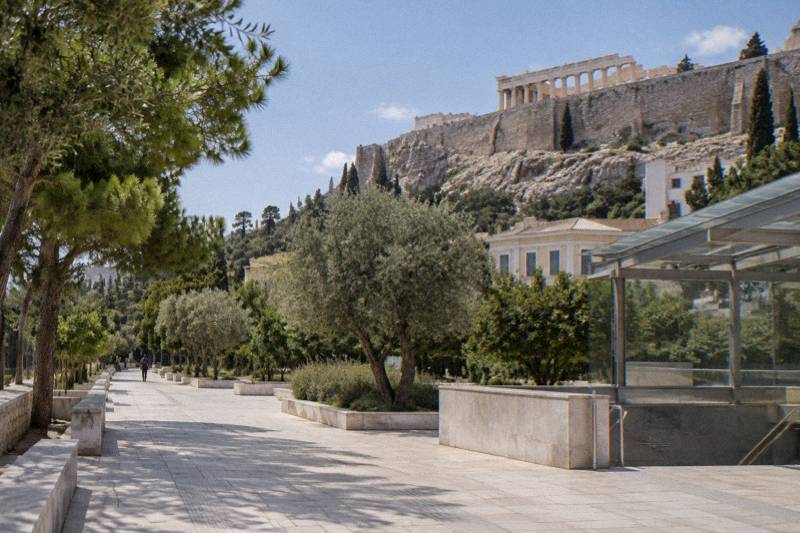
The count starts with ground that never charges. Plaka's streets are public streets, free to walk, with shops, museums and monuments inside them keeping their own prices. Anafiotika is a residential lane quarter under the Acropolis, free to walk, and because people live there it is a walk rather than an attraction with opening hours. Philopappos Hill and the Pnyx sit on the Ministry's Western Hills listing at EUR 0, open 24 hours. Lycabettus Hill is a public hill, walkable free. The National Garden opens to the public daily from sunrise to sunset.
The count then adds the calendar. The Ministry of Culture's state archaeological sites, the Acropolis included, open free to everyone on five fixed dates a year. The Acropolis Museum, an independent museum and not a state site, keeps its own four. EMST is free the first Thursday each month except July and August; the permanent exhibition at the Benaki Museum of Greek Culture is free on Thursdays from 18:00 to 24:00. None of these windows depends on how long a visitor stays, only on whether the dates fall inside the stay.
Four days in Athens can pass without a single entry fee, with the city's free attractions and free walking tours gathered on Free Things To Do In Athens. The shortest version of the same question is answered separately, in is one day in Athens enough. The three-day and two-day versions change the arithmetic, never the list itself.
What Free Places Could Fill Four Days?
The everyday free list fills days on its own: Plaka's public streets, the Anafiotika lanes under the Acropolis, Philopappos Hill and the Pnyx listed at EUR 0 and open 24 hours, Lycabettus Hill on foot, and the National Garden from sunrise to sunset. None of these charges entry, and none of them depends on catching a date.
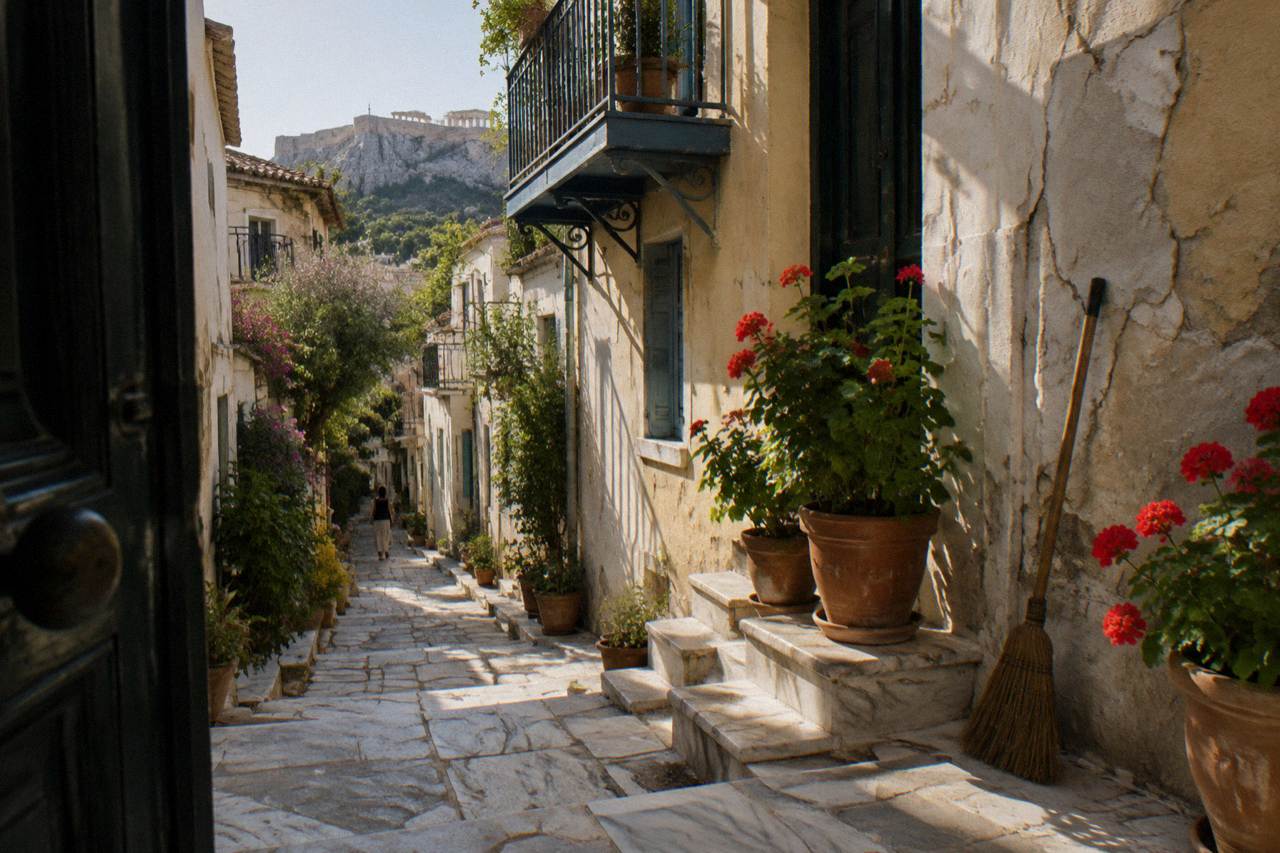
Plaka costs nothing to walk. Its streets are public streets, and the shops, museums and monuments inside the quarter keep their own prices, so a day spent in Plaka can be a day spent entirely without a ticket or a day that includes paid stops, at the visitor's choice. Anafiotika is the same kind of free with a different character: a residential lane quarter under the Acropolis where people live, which makes it a walk rather than an attraction with hours, and it costs nothing.
Philopappos Hill and the Pnyx carry the clearest free status in the city. The Ministry lists the Western Hills of the Acropolis, the Hill of the Nymphs, the Hill of the Muses and the Pnyx, at EUR 0, open 24 hours. The same listing carries an old notice that the site closes when wildfire-risk restrictions apply to parkland, so the hill is free and always open except when that restriction is in force.
Lycabettus Hill splits into two separate facts. The hill itself is public and walkable free, and the summit can also be reached by a signed 5 to 10 minute path from the Lycabettus Theatre parking area, per the funicular operator's own page. The funicular is a separate paid ride, EUR 13 return and EUR 10 one way.
The National Garden is open to the public daily from sunrise to sunset, on the City of Athens's own listing, which also notes that hours can change for safety reasons. That is the whole rule: free, daily, sunrise to sunset, with the caveat stated.
| Place | Entry cost | Condition |
|---|---|---|
| Plaka streets | Free | Public streets; shops, museums and monuments inside keep their own prices |
| Anafiotika | Free | Residential lanes under the Acropolis; a walk, not an attraction with hours |
| Philopappos Hill and the Pnyx | EUR 0 | Open 24 hours; closes when wildfire-risk restrictions apply to parkland |
| Lycabettus Hill on foot | Free | Signed 5-10 minute summit path from the Lycabettus Theatre parking area |
| Lycabettus funicular | EUR 13 return, EUR 10 one way | Separate paid ride, not part of the hill |
| National Garden | Free | Daily, sunrise to sunset; hours can change for safety reasons |
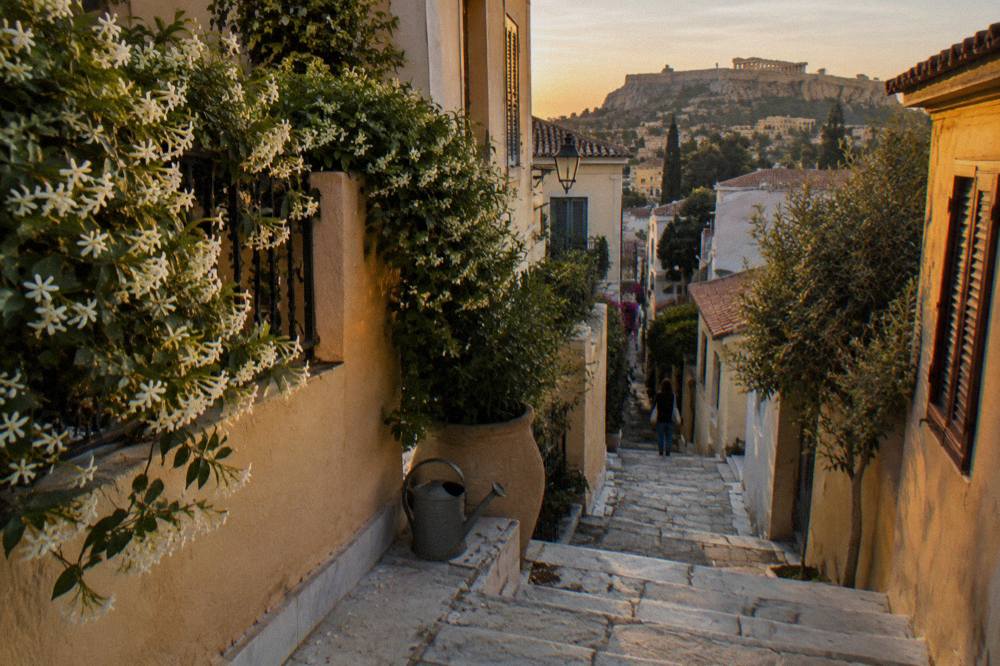
Free walking tours run through this ground as well, and they are free in the same way the hills are. The Trilingual Best-Of Walk meets at the Athens Metropolitan Cathedral, runs 2 hours 30 minutes in English, French and Spanish, and is rated 9.2 out of 10 across 99 freetour.com reviews. The Heart Of The City Walk meets at Mitropoleos and Voulis Streets, runs 2 hours 15 minutes in English, and is rated 4.91 out of 5 across 164 GuruWalk reviews. The History Enthusiasts' 3-Hour Walk meets at Panepistimio Metro Station, runs 3 hours in English, and is rated 9.8 out of 10 across 114 freetour.com reviews.
Which Ticketed Sites Sit On The Free-Entry Dates?
Entry to the Ministry of Culture's state archaeological sites is free for everyone on 6 March, 18 April, 18 May, the last weekend of September and 28 October. On all other days the Acropolis costs EUR 30 full and EUR 15 reduced, the Ancient Agora and the Olympieion EUR 20, the Roman Agora, Hadrian's Library and Kerameikos EUR 10, and the Lykeion EUR 5.
The five dates belong to the Ministry's own free-admission list, and they apply to the state sites it runs: the Acropolis, the Ancient Agora, the Roman Agora, Hadrian's Library, the Olympieion, Kerameikos and the Lykeion, each on its own page. On those dates, entry is free for everyone. On the rest of the year's days, each site sells tickets at its own prices.
The prices are fixed and published. The Acropolis is EUR 30 full and EUR 15 reduced, and its single ticket covers the Acropolis and its Slopes and is used once. The Ancient Agora is EUR 20 full and EUR 10 reduced. The Olympieion, the Temple of Olympian Zeus, matches it at EUR 20 and EUR 10. The Roman Agora, Hadrian's Library and Kerameikos each sit at EUR 10 full and EUR 5 reduced. The Lykeion is EUR 5 full and EUR 2.50 reduced.
| State site | Full price | Reduced price | Free dates |
|---|---|---|---|
| Acropolis | EUR 30 | EUR 15 | 6 Mar, 18 Apr, 18 May, last weekend of Sept, 28 Oct |
| Ancient Agora | EUR 20 | EUR 10 | Same five dates |
| Olympieion | EUR 20 | EUR 10 | Same five dates |
| Roman Agora | EUR 10 | EUR 5 | Same five dates |
| Hadrian's Library | EUR 10 | EUR 5 | Same five dates |
| Kerameikos | EUR 10 | EUR 5 | Same five dates |
| Lykeion | EUR 5 | EUR 2.50 | Same five dates |
What this means for a four-day stay is simple arithmetic. A visit that happens to include one of the five dates gets the Acropolis and the other state sites free. A visit that does not, pays the ticket prices above or spends its days on the free ground instead, and the free ground is not a consolation list: the hills, the streets and the gardens carry no entry fee at all.
On the days that are ticketed, the free walking tours still cost nothing, since every walk listed on this site is free or pay what you want, with no listing declaring a separate required cost. The Trilingual Best-Of Walk above runs on freetour.com and meets at the Athens Metropolitan Cathedral.
Which Museums Have Their Own Free Days?
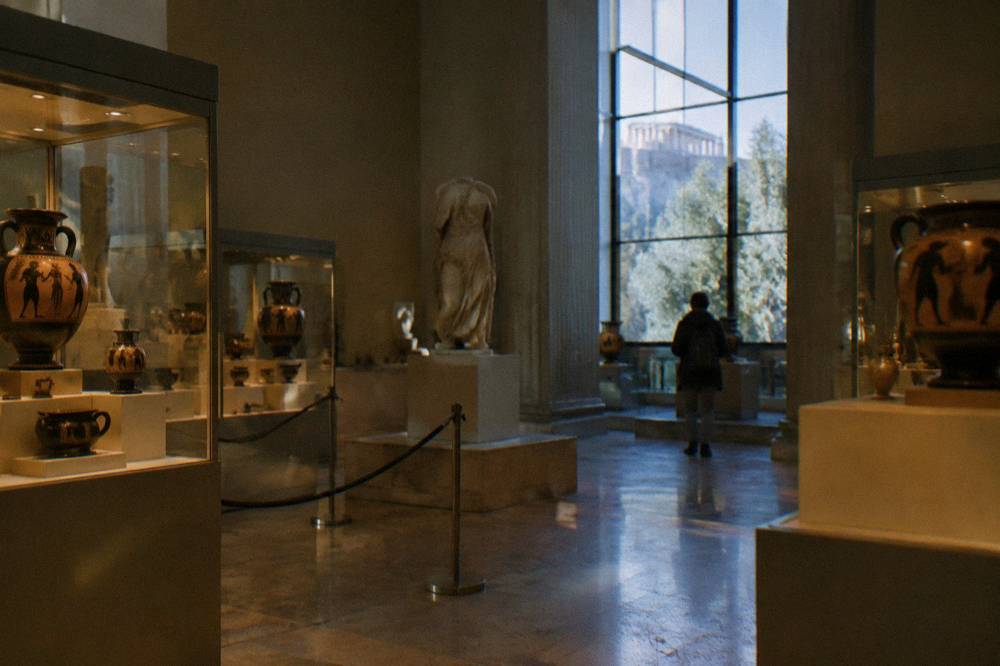
The Acropolis Museum is free on 6 March, 25 March, 18 May and 28 October, with EUR 20 general entry on all other days and free and reduced tickets collected at its desk. EMST is free the first Thursday of each month from 18:00 to 22:00, except July and August. The Benaki's permanent exhibition is free every Thursday from 18:00 to 24:00.
The Acropolis Museum is an independent museum, not a state site, and it does not borrow the Ministry's dates. Its own four free days are 6 March, 25 March, 18 May and 28 October, and its own page states there is no monthly free Sunday. General entry is EUR 20 on all other days, and free and reduced tickets are collected at the museum ticket desk with documents, not printed at home. The dates and the desk rule are both on the museum's own site.
EMST, the National Museum of Contemporary Art, runs a monthly evening window instead of fixed dates. It is free on the first Thursday of every month from 18:00 to 22:00, except July and August, and also at exhibition openings and selected events. The museum states plainly that it is not subject to the first-Sunday regulation that some other museums follow. General entry is EUR 10, reduced EUR 5, and the shop, cafe and restaurant entrances are free. Its hours are Tuesday to Sunday 11:00 to 19:00, Thursday 11:00 to 22:00, closed Monday, all stated on EMST's own site.
The Benaki Museum of Greek Culture on Koumbari Street takes a third shape. Its permanent exhibition is free every Thursday from 18:00 to 24:00, excluding organised tours and guided group visits. Full entry is EUR 12, reduced EUR 9. Its hours are Monday, Wednesday, Friday and Saturday 10:00 to 18:00, Thursday 10:00 to 24:00, Sunday 10:00 to 16:00, closed Tuesday.
| Museum | Free window | General price | Condition |
|---|---|---|---|
| Acropolis Museum | 6 Mar, 25 Mar, 18 May, 28 Oct | EUR 20 | Free and reduced tickets at the desk with documents; no monthly free Sunday |
| EMST | First Thursday monthly, 18:00-22:00, except July and August | EUR 10, reduced EUR 5 | Not subject to the first-Sunday regulation; closed Monday |
| Benaki, Koumbari Street | Thursdays 18:00-24:00, permanent exhibition | EUR 12, reduced EUR 9 | Excludes organised tours and guided group visits |
For a four-day stay, the museum windows work differently from the state-site dates. The Ministry's dates are single days scattered through the year, while EMST's Thursday evening and the Benaki's Thursday evening each come around every month, which makes them easier to catch by accident. A Thursday in the stay covers both.
Which Free Walks Run In English?
Yes. The 18 free walking tours listed across GuruWalk and freetour.com include English-language options in every group, alongside Spanish-only walks and multilingual walks in German, French and Italian. Each walk's listing names its languages, its meeting point and its duration, so the language check comes before any decision about which day a walk fills.
The English-language walks span every duration on the roster, from 1 hour 30 minutes to 3 hours. Become Greek On Foot, 3 Hours, meets at Epimenidou Street, runs 3 hours in English, Spanish and Italian, and is rated 4.77 out of 5 across 3,292 GuruWalk reviews. The 3-Hour Historic Center Walk meets at the Acropolis Metro Station, runs 3 hours in English and Spanish, and is rated 4.56 out of 5 across 2,281 GuruWalk reviews. The History Enthusiasts' 3-Hour Walk, rated 9.8 out of 10 across 114 freetour.com reviews, runs 3 hours in English from Panepistimio Metro Station.
George's New City Walk meets at the Statue of Theseus, runs 2 hours 30 minutes in English, and is rated 4.92 out of 5 across 1,139 GuruWalk reviews. The Evening Walk, 2 Hours 30, meets at Thissio Square, runs 2 hours 30 minutes in English, and is rated 9.7 out of 10 across 1,895 freetour.com reviews. The Trilingual Best-Of Walk and the Heart Of The City Walk, both introduced above, run in English as well.
The multilingual walks widen the choice further. Multilingual Mythology, Acropolis View meets at Syntagma Square and runs 2 hours in German, English, Spanish, French and Italian, rated 4.6 out of 5 across 175 GuruWalk reviews. Walk Of The Gods, Parthenon View meets at the Statue of Theseus and runs 2 hours in German, English, French and Italian, rated 4.78 out of 5 across 66 GuruWalk reviews. Night Tales, English And Italian meets at Monastiraki Square, runs 2 hours in English and Italian, and is rated 4.48 out of 5 across 46 GuruWalk reviews.
| Walk | Platform | Rating and reviews | Duration | Languages | Meets at |
|---|---|---|---|---|---|
| Become Greek On Foot, 3 Hours | GuruWalk | 4.77 out of 5 across 3,292 reviews | 3 hours | English, Spanish, Italian | Epimenidou Street |
| 3-Hour Historic Center Walk | GuruWalk | 4.56 out of 5 across 2,281 reviews | 3 hours | English, Spanish | Acropolis Metro Station |
| History Enthusiasts' 3-Hour Walk | freetour.com | 9.8 out of 10 across 114 reviews | 3 hours | English | Panepistimio Metro Station |
| George's New City Walk | GuruWalk | 4.92 out of 5 across 1,139 reviews | 2 hours 30 minutes | English | Statue of Theseus |
| Evening Walk, 2 Hours 30 | freetour.com | 9.7 out of 10 across 1,895 reviews | 2 hours 30 minutes | English | Thissio Square |
| Trilingual Best-Of Walk | freetour.com | 9.2 out of 10 across 99 reviews | 2 hours 30 minutes | English, French, Spanish | Athens Metropolitan Cathedral |
The Spanish-language walks are named plainly so no one books the wrong language. The Spanish-Language Essentials Walk runs 2 hours 30 minutes in Spanish from Korai Square. The Spanish-Language Mythology Walk runs 2 hours 15 minutes in Spanish from Panepistimio Metro Station. Robert Avignon's Mythology Walk runs 2 hours in Spanish from the Arch of Hadrian. All 18 walks, their languages and their meeting points are gathered in the free walking tours in Athens guide.
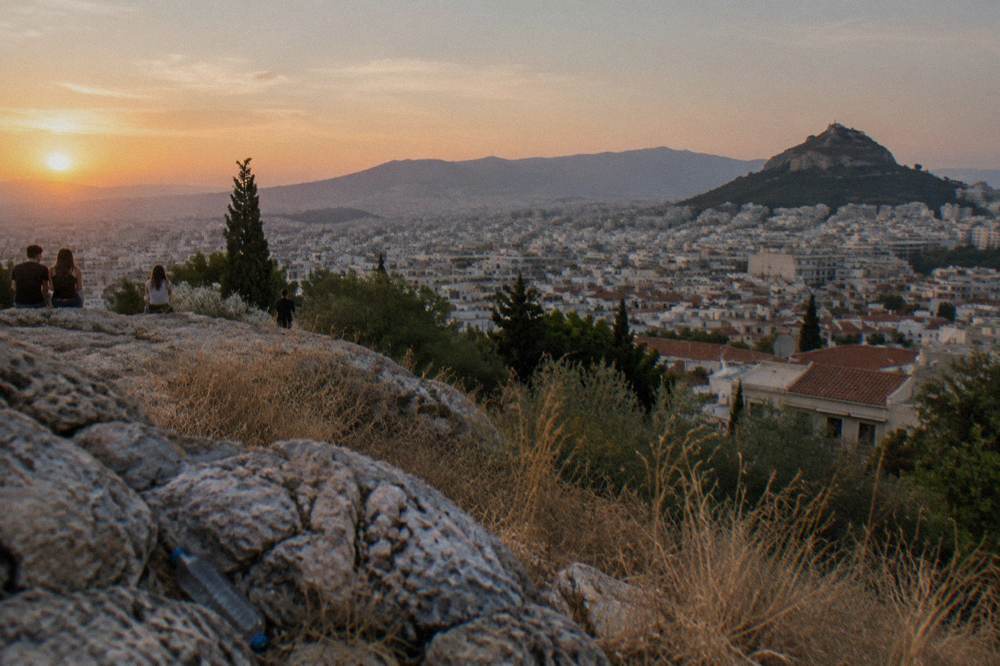
Evening slots exist for days already filled. The Evening Walk, 2 Hours 30, meets at Thissio Square in English on freetour.com, and Night Tales, English And Italian meets at Monastiraki Square on GuruWalk, so a day that begins on Philopappos Hill can still end on a guided walk without paying an entry fee for either.
The longer history walks fill an afternoon on their own. The 3-Hour Historic Center Walk with Elena meets at the Acropolis Metro Station, rated 4.56 out of 5 across 2,281 GuruWalk reviews, in English and Spanish. Hidden Corners, Myths And Local Life meets at the Lord Byron Statue, rated 9.7 out of 10 across 1,550 freetour.com reviews, 2 hours 30 minutes in English. The Local Walk With A Furry Pal meets at the Panathenaic Stadium, rated 4.88 out of 5 across 358 GuruWalk reviews, 2 hours in English.
Common Questions On This Topic
Is 4 Days In Athens Too Long?
No official source states an ideal length of stay, so there is no factual sense in which four days is too long. The free side of the city alone, the streets, the hills, the gardens and the 18 free walking tours, fills four days without an entry fee, and the fixed free dates add the ticketed sites when the calendar allows.
Is 3 Days In Athens Enough?
Three days cover the everyday free list, the Plaka streets, Anafiotika, Philopappos Hill, Lycabettus Hill on foot and the National Garden, with room left for free walking tours. What three days cannot guarantee is a fixed free date at a state site, since those depend on the calendar rather than the length of stay.
Is 2 Days In Athens Enough?
Two days reach the same free streets and hills, because none of them charges entry. The National Garden keeps sunrise-to-sunset hours and the Western Hills are open 24 hours. Two days simply leave less room for the free walking tours, which run between 1 hour 30 minutes and 3 hours each.
What Is Free In Athens Every Day?
Plaka's streets, the Anafiotika lanes, Philopappos Hill and the Pnyx at EUR 0 and open 24 hours, Lycabettus Hill on foot, and the National Garden from sunrise to sunset. The funicular up Lycabettus is a separate paid ride at EUR 13 return.
When Is The Acropolis Free To Enter?
On 6 March, 18 April, 18 May, the last weekend of September and 28 October, the five dates on the Ministry of Culture's free-admission list for its state sites. On all other days the Acropolis is EUR 30 full and EUR 15 reduced.
Do Free Walking Tours In Athens Run In English?
Yes. English-language walks appear in every group of the 18 free walking tours listed across GuruWalk and freetour.com, and each walk's own listing states its languages, its meeting point and its duration.