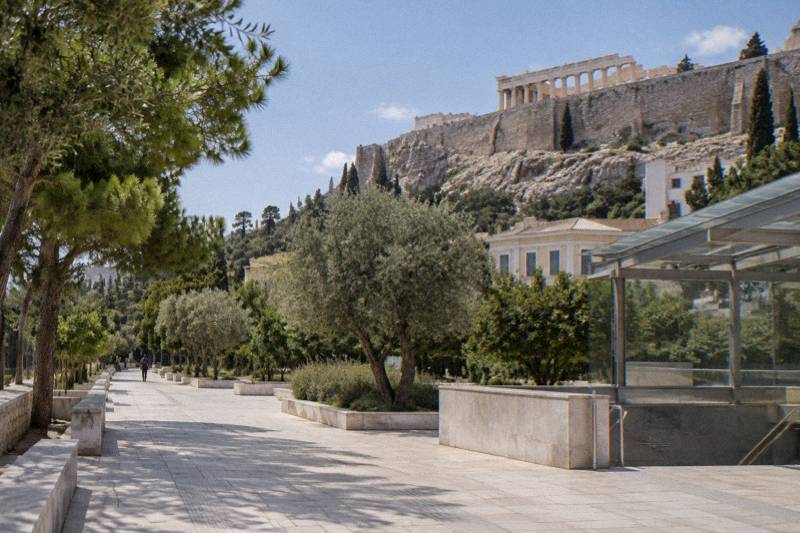
Areopagus Hill In Athens: What Is Free And What Is Not
The Areopagus, also called Mars Hill, is a free public rock beside the Acropolis with views over the Agora, and no ticket gate is documented for it. The Acropolis above it is ticketed every day at EUR 30. The hills around the Acropolis are free to walk, the Acropolis itself is ticketed, and central Athens has free, pay-what-you-want walking tours.
Short answer
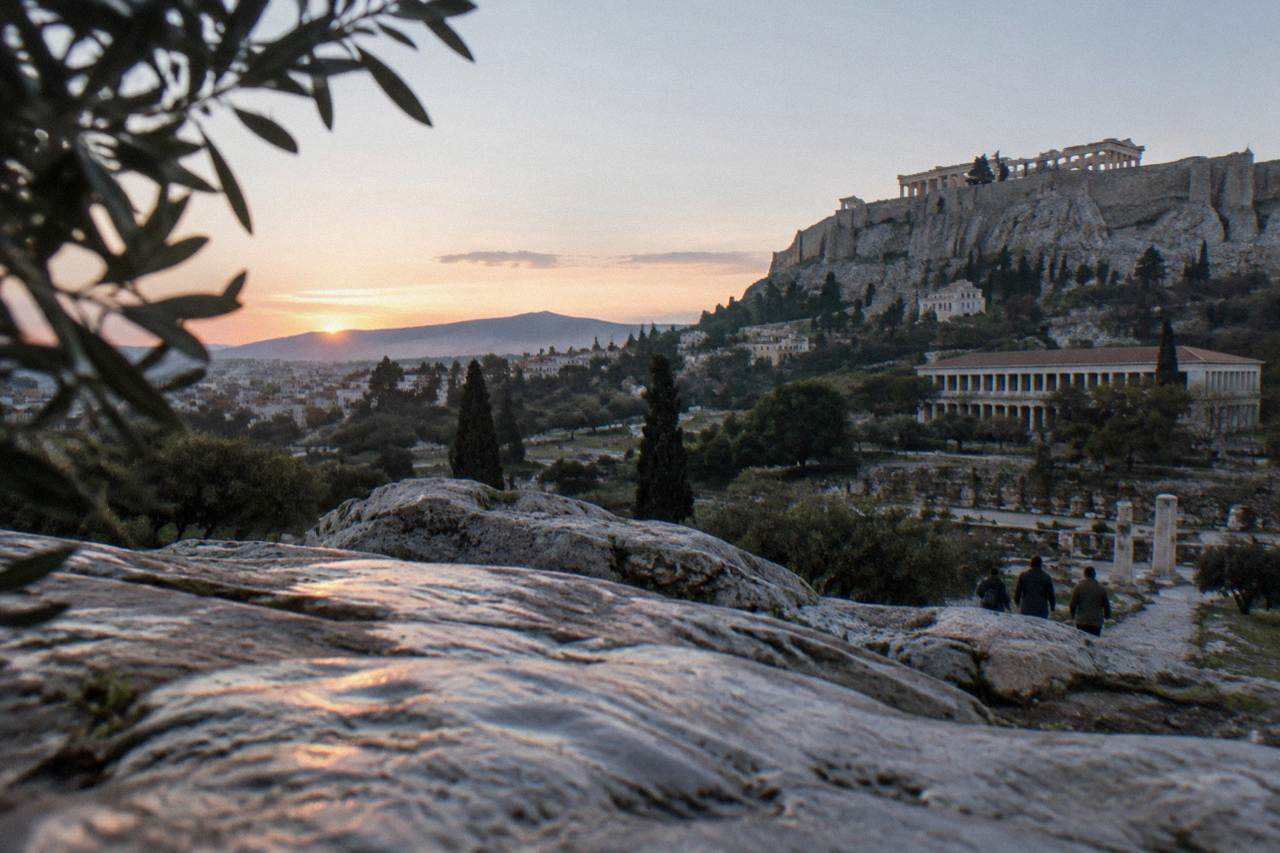
Areopagus Hill is free: a public rock beside the Acropolis with views over the Agora, no ticket gate documented and nothing to pay. The Acropolis beside it is ticketed at EUR 30 full and EUR 15 reduced, and is free only on 6 March, 18 April, 18 May, the last weekend of September and 28 October.
The Areopagus, also called Mars Hill, is a free public rock beside the Acropolis with views over the Agora. No ticket gate is documented for it, and nothing is charged to visit. The Acropolis that stands above it is a different story: ticketed every day at EUR 30 full price, with a single ticket that covers the Acropolis and its Slopes and is used once. Two pieces of ground in the same city, and two entirely different price structures.
The Areopagus is free. The Acropolis ticket is EUR 30. It is one of the places you will find on Free Things To Do In Athens, which lists what is genuinely free in the city, under which condition, and on which dates. Here the subject is one rock and everything around it: the free hills, the ticketed sites, and the free walking tours that start in central Athens.
The naming question comes up first in most searches, so it is worth settling immediately. Areopagus is the name used in Greek. Mars Hill is the common English one, and the site appears under both in guidebooks, maps and search results. They refer to the same free rock, and whichever name a search uses, the answer on price is identical: nothing, on any day, for anyone.
Is Areopagus Hill Free?
Yes. The Areopagus, also known as Mars Hill, is a free public rock beside the Acropolis with views over the Agora. No ticket gate is documented for the rock and nothing is paid to visit it. The Acropolis above it is a separate, ticketed site at EUR 30 full price, a striking contrast to the free rock below.
There is no fee, no timed entry, no desk, no reduced rate, because there is no rate at all. The Areopagus carries no price at all, which makes it unusual ground in this part of the city, where the major ancient sites charge EUR 20 and EUR 30 and run their entry through ticket gates and e-ticket services.
The rock is public ground. It sits beside the Acropolis as open hill rather than as a fenced archaeological enclosure, and its status as free public space is what separates it from the paid sites that surround it. The views over the Agora are part of the free scope: standing on the rock costs nothing, and nothing about the rock's free status depends on a date, an age, a nationality or an ID card.
What free does not mean is contagious. The Acropolis beside the rock is ticketed every day at EUR 30 full and EUR 15 reduced, and the Ancient Agora below it is ticketed at EUR 20 full and EUR 10 reduced. Each of those sites keeps its own ticket, its own free dates and its own hours. The Areopagus's status belongs to the Areopagus alone, and standing on free ground does not open any of the gates around it.
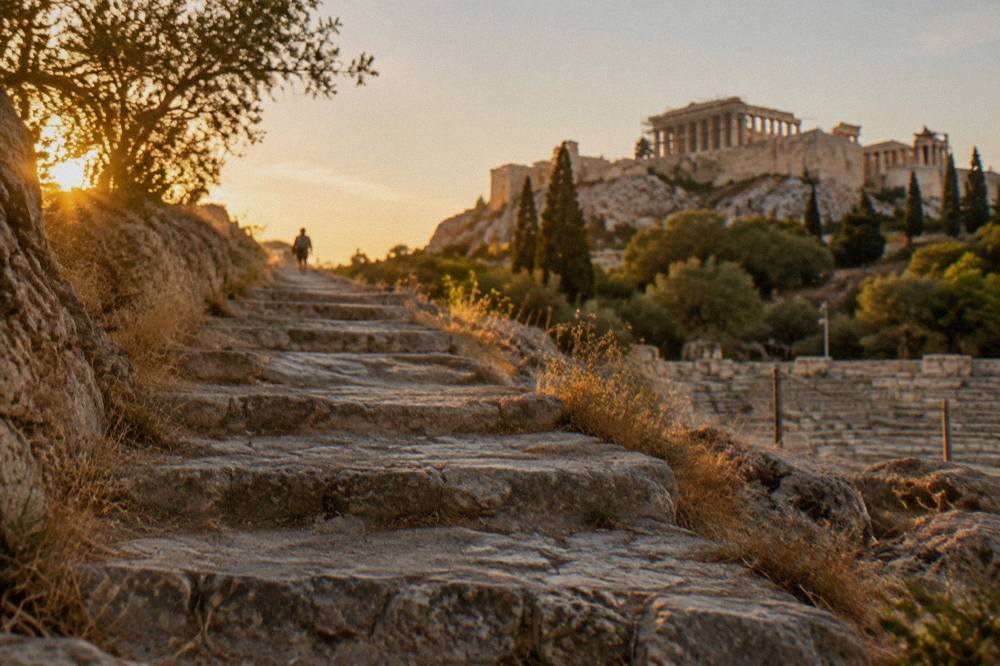
The practical reading is simple. The line falls hill by hill: some slopes are free to walk, others sit behind a ticket.
There is one boundary to the free claim that should be stated plainly. No official notice describing current access conditions for the Areopagus, or any restriction on its steps, has been published, so check the situation on arrival rather than assuming anything about access to the rock. The Areopagus is a public rock: no ticket gate, nothing to pay. Anything beyond that is not stated, because it is not established.
How Does Areopagus Hill Differ From The Acropolis Ticket?
The Areopagus costs nothing and no ticket gate is documented for it. The Acropolis is ticketed every day at EUR 30 full and EUR 15 reduced; one ticket covers the Acropolis and its Slopes and is used once, because leaving through either exit cancels re-entry. Free entry comes only on the Ministry free dates and for the permanent free categories.
The full price is EUR 30 and the reduced price is EUR 15. One ticket covers the Acropolis and its Slopes together, and it is used once: leaving through either exit cancels re-entry, so a visit inside is a single continuous stay rather than a day pass. The site keeps seasonal hours, 08:00 to 17:00 in winter and 08:00 to 20:00 in summer, with last entrance 30 minutes earlier, and it closes on 1 January, 25 March, 1 May, Orthodox Easter Sunday, and 25 and 26 December.
The free dates are fixed and few. The Acropolis is free on 6 March, 18 April, 18 May, the last weekend of September and 28 October, the five dates listed on the Ministry's Acropolis page. Beyond those dates, entry is free only for the permanent free categories, for example EU visitors up to 25 and non-EU visitors up to 18, with ID. Advance sales for the state sites run through the Ministry's e-ticket service. None of that machinery touches the Areopagus, which has no ticket, no gate and no date on which it becomes cheaper, because it never costs anything to begin with.
The difference between the two is therefore not a discount question. It is a structural one. The Acropolis is a gated archaeological site with a priced, dated, single-use ticket; the Areopagus is open public rock. A visitor cannot buy their way onto the Areopagus, cannot overpay for it, and cannot miss a free day on it, because every day it can be visited is a free day. The Acropolis, by contrast, has a price, a schedule, a re-entry rule and a short list of dates on which the price drops to zero.
| Ground | Entry status | Full price | Reduced price | Free dates |
|---|---|---|---|---|
| Areopagus (Mars Hill) | Free, no ticket gate documented | Nothing to pay | Nothing to pay | Free on every day it can be visited, no ticket involved |
| Acropolis of Athens | Ticketed every day | EUR 30 | EUR 15 | 6 March, 18 April, 18 May, last weekend of September, 28 October |
| Ancient Agora and museum | Ticketed every day | EUR 20 | EUR 10 | The same five Ministry dates |
The pattern in that table repeats across the district: the free ground and the paid ground sit close together in the landscape but never share a price structure. A full walk through the free hill ground behind the Acropolis is in the free Philopappos Hill guide, and the Acropolis side, including its hours and closures, is covered in depth in the full Acropolis ticket guide.
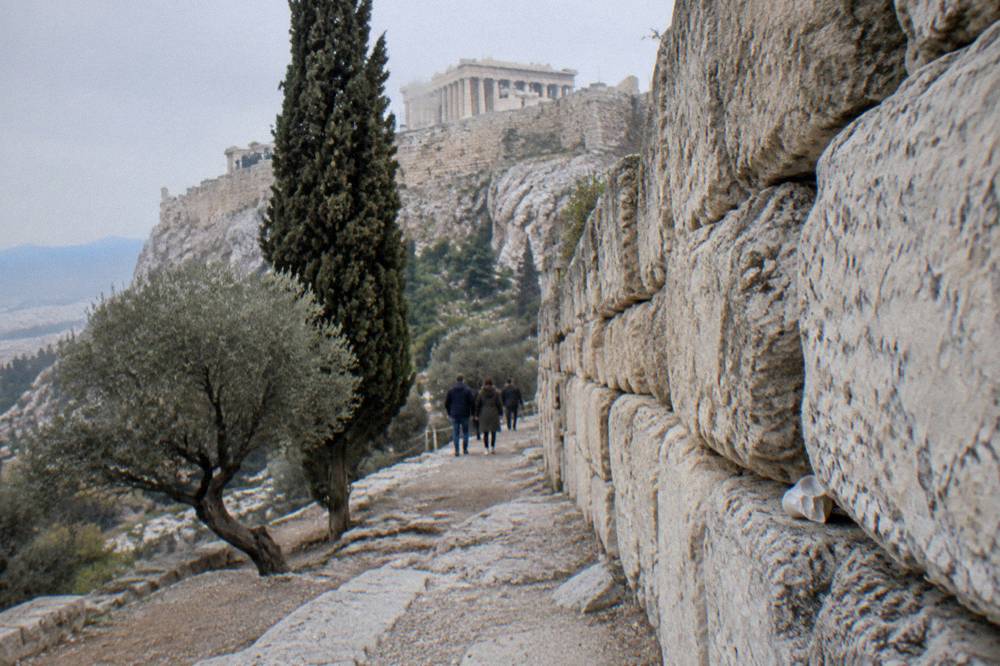
The old town around these ticketed sites is also where the city's free walking tours begin. This site lists 18 of them across GuruWalk and freetour.com, every one free to join with pay what you want at the end, and their meeting points sit across the centre. The selection below pairs the History Enthusiasts' 3-Hour Walk with the Trilingual Best-Of Walk and George's New City Walk: three different guides, two platforms, one price of nothing.
Which Other Free Hills Sit Nearby?
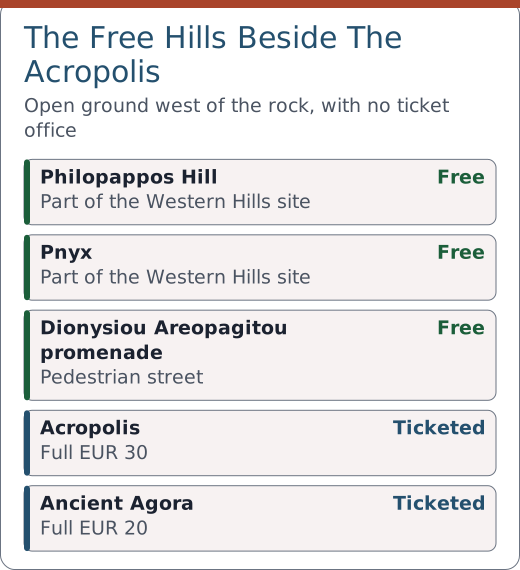
Philopappos Hill and the Pnyx are free: the Ministry lists the Western Hills of the Acropolis, the hills of the Nymphs, the Muses and the Pnyx, at EUR 0 and open 24 hours. The Dionysiou Areopagitou promenade along the south slope is free to walk. Wildfire-season closure notices can apply to the hills.
The Ministry lists the Western Hills of the Acropolis, the hills of the Nymphs, the Muses and the Pnyx, at EUR 0, open 24 hours. The same listing carries an old notice that the site is closed when wildfire-risk restrictions apply to parkland, so the 24-hour status travels with that condition attached. Nothing is paid on the hill itself, and no ticket, desk or gate stands between a walker and the ground. The full detail is in the free Philopappos Hill guide.
The Pnyx holds the same status. It is part of the Western Hills listing at EUR 0 and open 24 hours, with the same wildfire-season closure notices to check. Like Philopappos, it is free public hill ground rather than a gated site, and like the Areopagus it never carries a ticket, a desk or a price. Its free status is not seasonal, not date-bound and not conditional on anything except the wildfire notices that can close parkland across the hot months.
The Dionysiou Areopagitou promenade completes the free set. It is a pedestrian street along the Acropolis south slope, free to walk, and it belongs to the open public space of the city rather than to any ticketed operator. The monuments beside it, the Acropolis, the Theatre of Dionysus, the Acropolis Museum and the Olympieion, are separately ticketed, each on its own terms and at its own price. The promenade itself is simply a street, and streets in this city are free to walk.
| Free ground | Cost | Stated hours | Condition |
|---|---|---|---|
| Areopagus (Mars Hill) | Free, nothing to pay | No ticket gate documented | Public rock beside the Acropolis |
| Philopappos Hill | EUR 0 | Open 24 hours | Closed when wildfire-risk restrictions apply to parkland |
| Pnyx | EUR 0 | Open 24 hours | Wildfire-season closure notices possible |
| Dionysiou Areopagitou promenade | Free to walk | Open public street | The monuments beside it are separately ticketed |
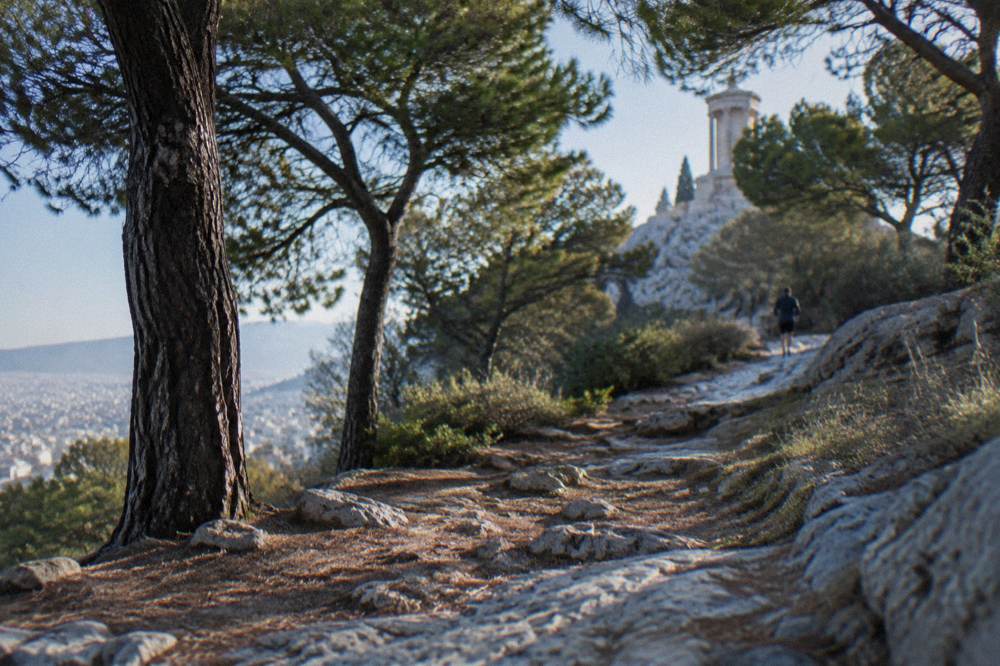
Taken together, the rock, the hills and the promenade form the free side of this district, and the free side is substantial: open ground, listed at EUR 0, walkable without a ticket on any day the wildfire notices do not close the hills. The paid side is equally clear, and it is the subject of the next section. Keeping the two sides straight is the single most useful thing a visitor to this district can do before setting out.
The ancient-history character of this ground is also what draws the guided free walks. The History Enthusiasts' 3-Hour Walk, run by Athens Historic Experiences on freetour.com, is rated 9.8 out of 10 across 114 freetour.com reviews, lasts 3 hours in English and meets at Panepistimio Metro Station. Its full details are on the History Enthusiasts' 3-Hour Walk page.
What Costs Money Around The Hill?
Three things around the Areopagus cost money: the Acropolis at EUR 30 full and EUR 15 reduced, the Ancient Agora at EUR 20 full and EUR 10 reduced, and the Acropolis Museum at EUR 20. The Theatre of Dionysus and the Olympieion, beside the promenade, are separately ticketed. The Areopagus rock itself and the free hills cost nothing.
The Acropolis ticket is covered in full above: EUR 30 full, EUR 15 reduced, one ticket for the Acropolis and its Slopes, used once, with re-entry cancelled by leaving through either exit. The Ancient Agora works on the same gated model at a lower price. Its full ticket is EUR 20 and its reduced ticket is EUR 10, and the ticket is valid for the site and the museum, the Stoa of Attalos, together. It opens 08:00 to 16:30 in winter with last entrance at 16:10, and 08:00 to 19:30 in summer with last entrance at 19:00. Its free days are the same five Ministry dates: 6 March, 18 April, 18 May, the last weekend of September and 28 October.
The Acropolis Museum is the third paid item, and it is worth being precise about what it is, because it is often assumed to share a rule with the rock and the sites around it. The Acropolis Museum is an independent museum, not a state archaeological site. Its general ticket is EUR 20, and its own free dates are 6 March, 25 March, 18 May and 28 October, a different list from the Ministry's five. It states no monthly free Sunday, and its free and reduced tickets are collected at the museum desk. The full detail is in the Acropolis Museum free-days guide.
The Theatre of Dionysus and the Olympieion sit beside the free promenade and are separately ticketed, each on its own terms. The rule that matters here is the boundary one: a free street past a monument does not make the monument free, and a free rock beside a site does not make the site free.
| Paid item | Full price | Reduced price | Free dates | Own rule |
|---|---|---|---|---|
| Acropolis of Athens | EUR 30 | EUR 15 | 6 March, 18 April, 18 May, last weekend of September, 28 October | One ticket for the Acropolis and its Slopes, used once |
| Ancient Agora and museum | EUR 20 | EUR 10 | The same five Ministry dates | Ticket valid for the site and the museum |
| Acropolis Museum | EUR 20 | EUR 10 on its own scale | 6 March, 25 March, 18 May, 28 October | Independent museum, free tickets at the desk, no monthly free Sunday |
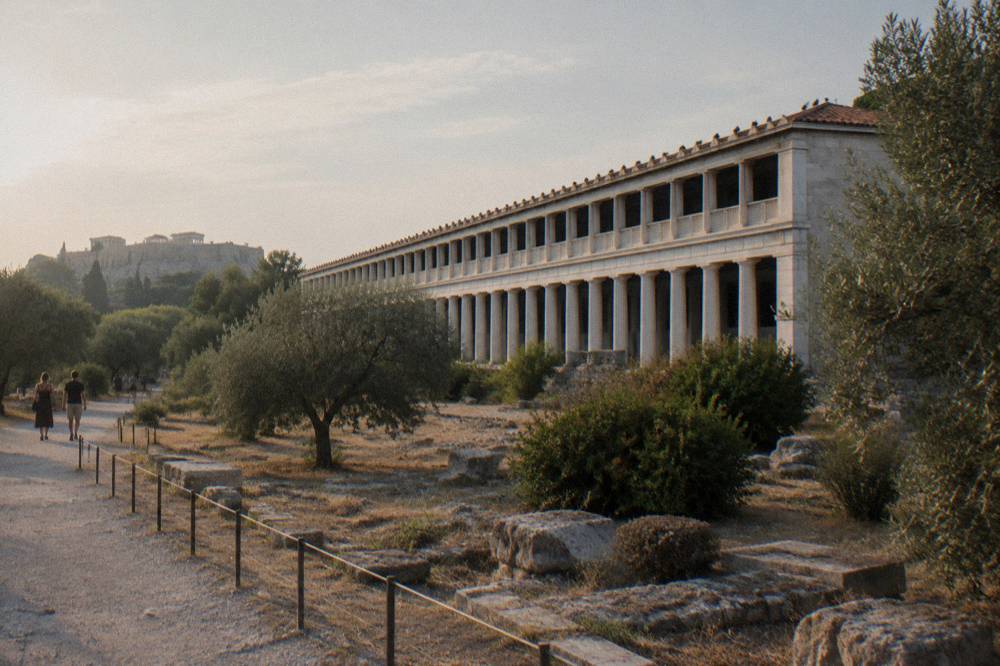
Nothing in that table touches the Areopagus. The rock appears in none of the price columns, none of the free-date columns and none of the ticket rules, because it has no price, no dates and no ticket. The money around the hill is spent entirely on the gated sites, and every one of those sites keeps its own regime, its own desk and its own list of dates on which the price falls away.
The paid ground is also where several of the free walking tours begin their own ground. Become Greek On Foot, 3 Hours, run by Become Greek on foot on GuruWalk, is rated 4.77 out of 5 across 3,292 GuruWalk reviews, lasts 3 hours in English, Spanish and Italian and meets at Epimenidou Street. Its full details are on the Become Greek On Foot page.
A longer visit to this district can pair the free rock and hills with one ticketed site, and the choice between the Acropolis, the Ancient Agora and the Acropolis Museum is a real one, since each costs EUR 20 or EUR 30 and each answers a different question about ancient Athens. The free walking tours, by contrast, answer that question at no fixed price at all.
Which Free Walking Tours Start In Central Athens?
This site lists 18 free walking tours across GuruWalk and freetour.com, every one free to join with pay what you want at the end. Their meeting points sit across the centre, including Acropolis Metro Station, Panepistimio Metro Station, Syntagma Square, Thissio Square and the Statue of Theseus. None charges a fixed price.
Free walking tours are a fitting way to take in this district. A local guide runs the walk, participants pay what they want at the end, and the meeting points sit in the squares and streets of the centre rather than behind any gate.
The walks divide by theme as much as by ground. Mythology and legends walks cover the same ground from a different angle. Old town and highlights walks take the wider centre, and evening walks run after dark. The languages vary too: most run in English, some in English and Spanish, and a smaller number in German, French or Italian alongside English.
| Walk | Platform | Guide or operator | Rating and reviews | Duration | Languages |
|---|---|---|---|---|---|
| Become Greek On Foot, 3 Hours | GuruWalk | Become Greek on foot | 4.77 out of 5 across 3,292 GuruWalk reviews | 3 hours | English, Spanish, Italian |
| 3-Hour Historic Center Walk | GuruWalk | Elena | 4.56 out of 5 across 2,281 GuruWalk reviews | 3 hours | English, Spanish |
| History Enthusiasts' 3-Hour Walk | freetour.com | Athens Historic Experiences | 9.8 out of 10 across 114 freetour.com reviews | 3 hours | English |
| Evening Walk, 2 Hours 30 | freetour.com | New Athens free tour | 9.7 out of 10 across 1,895 freetour.com reviews | 2 hours 30 minutes | English |
| Heart Of The City Walk | GuruWalk | William | 4.91 out of 5 across 164 GuruWalk reviews | 2 hours 15 minutes | English |
The ratings in that table are printed on their own scales, and the scales differ by platform: GuruWalk rates out of 5, freetour.com rates out of 10, and the two are never converted into each other. A 9.7 out of 10 on freetour.com and a 4.91 out of 5 on GuruWalk are both stated as their own figures, beside their own review counts, on their own platforms.
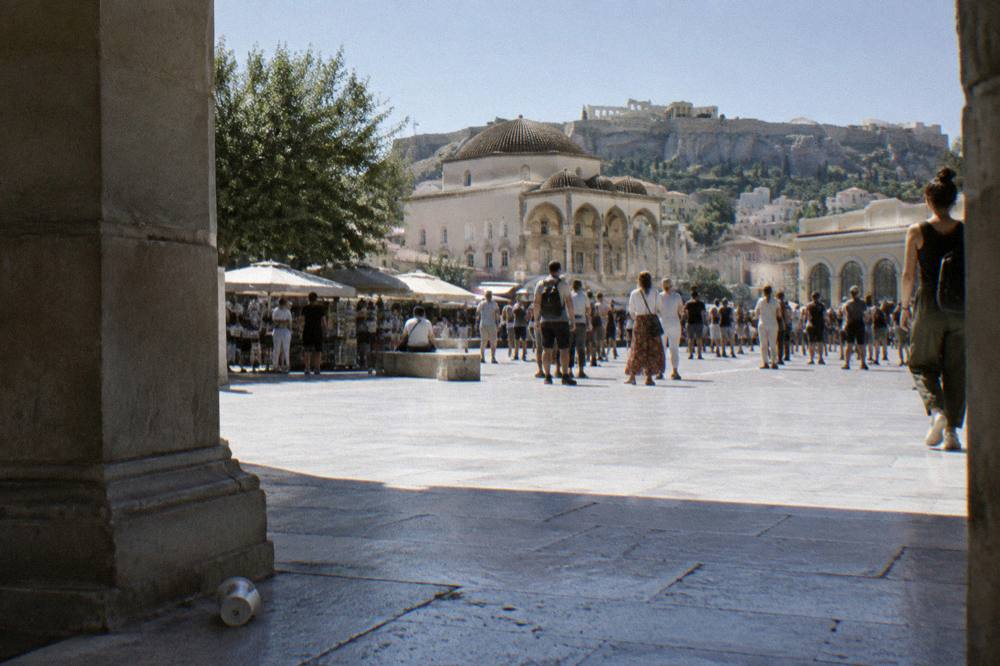
Among the ancient-history walks, the 3-Hour Historic Center Walk, run by Elena on GuruWalk, is rated 4.56 out of 5 across 2,281 GuruWalk reviews, lasts 3 hours in English and Spanish and meets at Acropolis Metro Station. Its full details are on the 3-Hour Historic Center Walk page.
The wider directory of walks, including the mythology, local and evening families, is in the free walking tours guide, and the question of what a pay-what-you-want walk is worth, and how the tipping side works, is answered in the free walking tours worth-it article. For this district, the short version is that the walks cost nothing to join, run in several languages, and meet at named central points, and that the choice between them is a choice of guide, theme and language rather than of price.
The evening and local families round the directory out. The Local Walk With A Furry Pal, run by Alexia on GuruWalk, is rated 4.88 out of 5 across 358 GuruWalk reviews, lasts 2 hours in English and meets at the Panathenaic Stadium. Hidden Corners, Myths And Local Life, run by Ektor free walking tour on freetour.com, is rated 9.7 out of 10 across 1,550 freetour.com reviews, lasts 2 hours 30 minutes in English and meets at the Lord Byron Statue. The Evening Walk, 2 Hours 30, run by New Athens free tour on freetour.com, is rated 9.7 out of 10 across 1,895 freetour.com reviews, lasts 2 hours 30 minutes in English and meets at Thissio Square.
Every one of them is free to join, pay what you want at the end, and every one is a real listing on its own platform, run by its own named guide or operator. The selection below pairs the Local Walk With A Furry Pal with Hidden Corners, Myths And Local Life and the Evening Walk, 2 Hours 30.
Common Questions About Areopagus Hill
Is Areopagus Hill free?
Yes. The Areopagus, also called Mars Hill, is a free public rock beside the Acropolis with views over the Agora. No ticket gate is documented for it and nothing is paid to visit it. Its current access conditions, including any restriction on the steps, are not established in any official notice, so no claim is made here about steps, closures or opening hours.
How does Areopagus Hill differ from the Acropolis ticket?
The Areopagus costs nothing and has no ticket gate. The Acropolis is ticketed every day at EUR 30 full and EUR 15 reduced, and one ticket covers the Acropolis and its Slopes and is used once, because leaving through either exit cancels re-entry. The Acropolis is free only on 6 March, 18 April, 18 May, the last weekend of September and 28 October, and for the permanent free categories with ID.
Which other free hills sit near the Areopagus?
Philopappos Hill and the Pnyx are free: the Ministry lists the Western Hills of the Acropolis at EUR 0 and open 24 hours, with wildfire-season closure notices possible. The Dionysiou Areopagitou promenade along the south slope is also free to walk. The monuments beside the promenade are separately ticketed.
What costs money around Areopagus Hill?
The Acropolis at EUR 30 full and EUR 15 reduced, the Ancient Agora at EUR 20 full and EUR 10 reduced, and the Acropolis Museum at EUR 20. The Theatre of Dionysus and the Olympieion are also separately ticketed. The Areopagus rock itself, Philopappos Hill, the Pnyx and the promenade cost nothing.
Is Mars Hill the same as Areopagus Hill?
Yes. Areopagus is the name used in Greek and Mars Hill is the common English one. Both refer to the same free public rock beside the Acropolis, and whichever name is used, the price is the same: nothing, with no ticket gate documented.
Are there free walking tours in central Athens?
Yes. This site lists 18 free walking tours across GuruWalk and freetour.com, every one free to join with pay what you want at the end. Their meeting points sit across the centre, including Acropolis Metro Station, Panepistimio Metro Station, Syntagma Square, Thissio Square and the Statue of Theseus.