Is The Acropolis Free?
No, the Acropolis is ticketed: EUR 30 full price, EUR 15 reduced. Entry is free only on five fixed Ministry dates and for permanent free categories. Here is exactly what is free and what is not.
Is The Acropolis Free?
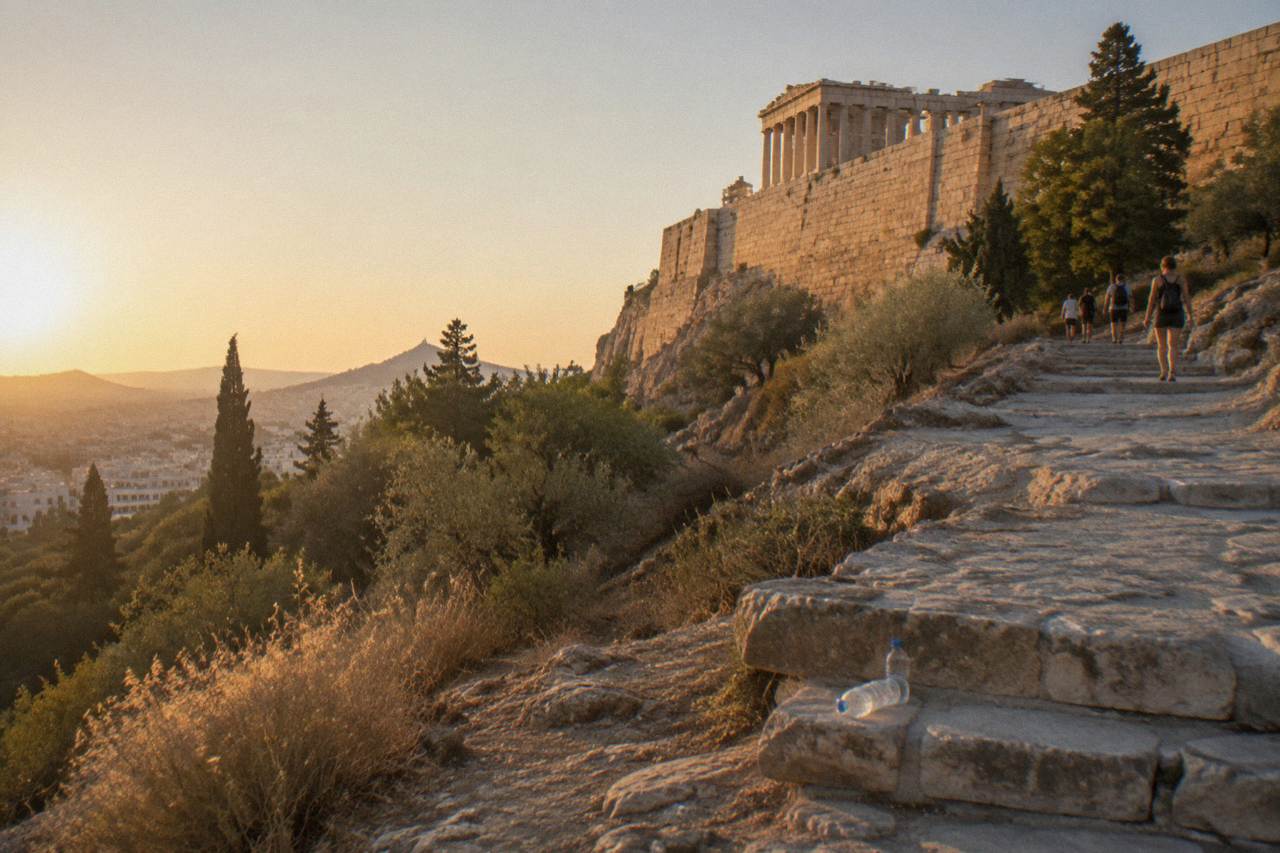
No. The Acropolis is ticketed, and entry is free only on the Ministry free days and for the permanent free categories. A full ticket costs EUR 30 and a reduced ticket costs EUR 15, and one ticket covers the Acropolis and its Slopes, used once: leaving through either exit cancels re-entry. Free entry exists on five fixed dates and for permanent free categories, but on an ordinary day there is a fee to go up.
That is the short answer, and it surprises people who have read that Athens is full of free antiquities. The city is full of them, and the hills, squares and promenades around the Acropolis are genuinely free. The rock itself is a Ministry of Culture state archaeological site, and state sites charge every day outside a small set of exceptions. The Acropolis page on odysseus.culture.gr lists the ticket prices and the free-admission dates, and those two lists are the whole basis of the free-entry rule.
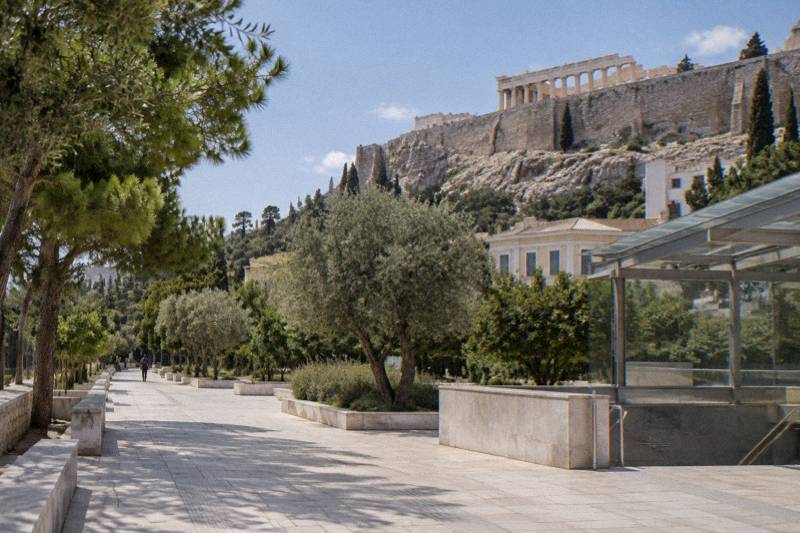
The distinction that matters is between the site and the ground around it. Walking up to the ticketed entrance is not the same as entering. The Dionysiou Areopagitou promenade, a pedestrian street along the south slope, is free to walk, and the hills on the other side are free as well. This site, Free Things To Do In Athens, separates those two facts everywhere it writes about the Acropolis, because merging them is how visitors end up planning a free morning that is actually a EUR 30 morning.
There is one more layer. The Acropolis and the Acropolis Museum are two separate operators with two separate free-date lists, and people constantly transfer rules between them. The museum is independent, sets its own EUR 20 general ticket and keeps its own four free dates. Nothing that applies to the museum applies to the site, and nothing on the Ministry's list reaches the museum's desk. The full picture of both is in the Acropolis of Athens guide.
If you want the ancient city explained rather than just ticketed, the free walking tours are the other half of the free side of Athens. Three of them, all pay what you want, are below.
On Which Dates Is It Free?
Entry to the Acropolis is free for everyone on five fixed dates: 6 March, 18 April, 18 May, the last weekend of September and 28 October. These are Ministry of Culture free-admission days, listed on the Acropolis's own page, and they apply to the state archaeological sites, not to the Acropolis Museum, which keeps its own four dates.
The five dates are the same across the Ministry's state sites. The Ancient Agora, the Roman Agora and the Tower of the Winds, Hadrian's Library, the Temple of Olympian Zeus, Kerameikos and the Lykeion all open free on the same days, each on its own page. On 18 May entry to the Acropolis is free for everyone, and the same free day applies at the Ancient Agora, the Roman Agora, Hadrian's Library, the Olympieion, Kerameikos and the Lykeion. The dates are fixed to the calendar, not to a weekday, so they fall differently each year.
What the five dates do not do is create a monthly pattern. The five dates are the dates the site's own page lists, and any other claim about Sundays belongs to other museums with their own rules, some of which are covered in are museums free on Sundays in Athens.
The table below puts the free dates against what each one is.
| Free date | What is free that day | Who runs it |
|---|---|---|
| 6 March | Acropolis and the other state archaeological sites | Ministry of Culture |
| 18 April | Acropolis and the other state archaeological sites | Ministry of Culture |
| 18 May | Acropolis and the other state archaeological sites | Ministry of Culture |
| Last weekend of September | Acropolis and the other state archaeological sites | Ministry of Culture |
| 28 October | Acropolis and the other state archaeological sites | Ministry of Culture |
Note what is absent from that table: the Acropolis Museum. Its free dates are 6 March, 25 March, 18 May and 28 October, its general ticket is EUR 20, and its free and reduced tickets are issued only at the museum desk. Two of its four dates coincide with Ministry days and two do not, which is exactly the kind of overlap that creates false expectations. The museum's rules are laid out in full in is the Acropolis Museum ever free.
If your dates do not line up with the five free days, a guided walk is the other way to spend nothing on the ancient city while the ticket does its separate work.
Who Gets In Free On Any Day?
Outside the five dates, entry is still free for permanent categories: EU visitors up to 25 with an ID card or passport, and non-EU visitors up to 18 with a passport. These categories apply at the state sites. Adults over 25 pay full price. The categories need proof, carried on the day.
The category list comes from the state-site rules, stated on the Byzantine and Christian Museum's own page: free for EU children and young people up to 25, with ID card or passport, and non-EU children up to 18, with passport. The Acropolis applies the same state-site categories. What that means in practice is that visitors from EU countries enter the Acropolis free with ID up to the age of 25, and non-EU visitors enter free under 18, so a family with non-EU children under 18 pays only for the adults.
The proof is the operative part. The category is checked at the entrance, so the ID or passport has to be on the person, not in a hotel safe. There is no separate free ticket to arrange in advance for the state sites; their free categories need ID. The Acropolis Museum keeps its own list of free and reduced categories, separate from the state-site categories, and issues those tickets only at its own ticket desk, with documents. The two lists look similar and are not interchangeable, which is the recurring theme of every Acropolis question.
One warning that belongs here because it costs people real money: the ticket resellers. Domains styled as official Acropolis ticket shops sell marked-up or worthless entries, and the Ministry's own e-ticket service is the only purchase route worth trusting. More than a dozen of these resale sites exist, several styled as the official page, and the Ministry's e-ticket service is the route to trust. If a third party promises priority entry, it is not the operator.
What Does A Normal Ticket Cost?
A full Acropolis ticket costs EUR 30 and a reduced ticket costs EUR 15. One ticket covers the Acropolis and its Slopes and is used once: leaving through either exit cancels re-entry. Opening hours are 08:00-17:00 in winter and 08:00-20:00 in summer, with last entrance 30 minutes earlier, and the site closes on 1 January, 25 March, 1 May, Orthodox Easter Sunday, and 25 and 26 December.
The single-ticket rule is the one that catches people who plan to dip out and return. The ticket is used once, and exit is exit. The Slopes are part of the same ticket, so the price covers more than the summit path, but it covers it one time only.
The price table, with the other state sites beside it for comparison:
| State site | Full ticket | Reduced ticket |
|---|---|---|
| Acropolis of Athens | EUR 30 | EUR 15 |
| Ancient Agora | EUR 20 | EUR 10 |
| Temple of Olympian Zeus | EUR 20 | EUR 10 |
| Roman Agora and Tower of the Winds | EUR 10 | EUR 5 |
| Hadrian's Library | EUR 10 | EUR 5 |
| Kerameikos | EUR 10 | EUR 5 |
| Lykeion | EUR 5 | EUR 2.50 |
The spread is wide. The Acropolis is the most expensive state site in the city by a clear margin, and the smaller sites cost a fraction of it. Whether a multi-site visit adds up depends on the dates: on the five free days the whole column collapses to zero, and on the permanent free categories it collapses for the under-25s and under-18s regardless of date. The budget question around all of this is covered separately in is Athens affordable to visit.
There is no combined ticket to add here, because the operator states none. The same caution applies to skip-the-line claims from resellers: they are marketing, not a rule.
Which Free Hills Sit Beside The Acropolis?
The hills around the Acropolis are free. Philopappos Hill and the Pnyx are part of the Western Hills site, which the Ministry lists at EUR 0 and open 24 hours, with wildfire-season closure notices possible. The Dionysiou Areopagitou promenade, the pedestrian street along the south slope, is free to walk. The monuments beside it are separately ticketed.
The hills around the Acropolis are free to walk, the Acropolis itself is ticketed. The Acropolis is EUR 30. The ground at its foot costs nothing. A visitor can spend an entire day on free ground around a ticketed rock, and the Ministry itself prices that ground at zero. The Western Hills listing covers the Hill of the Nymphs, the Hill of the Muses and the Pnyx, open around the clock, with the caveat the page carries: the site closes when wildfire-risk restrictions apply to parkland.

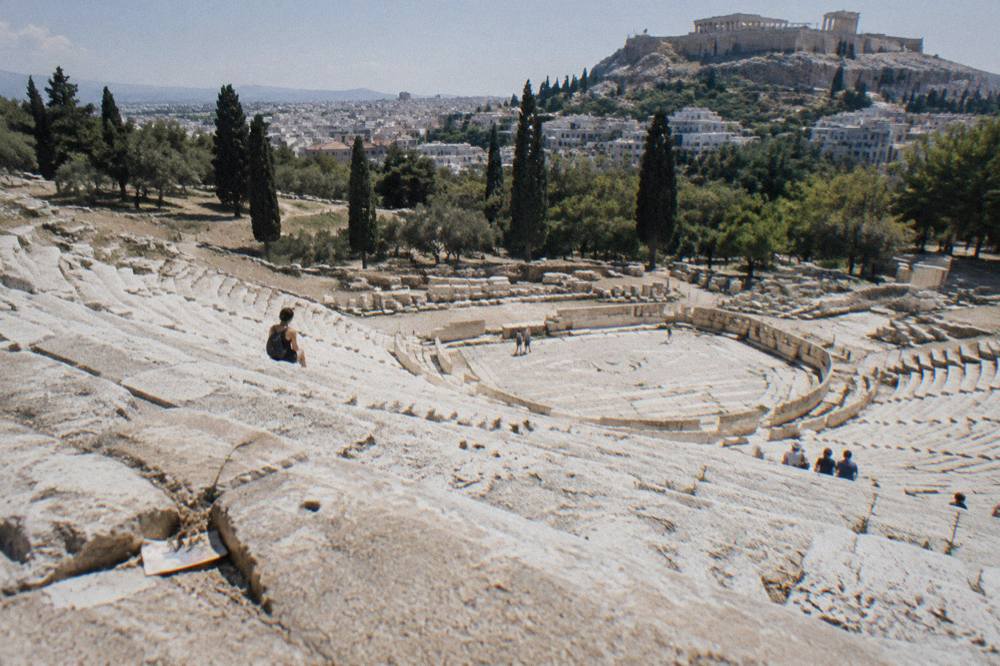
The promenade is the other half. Dionysiou Areopagitou is a pedestrian street along the Acropolis south slope, free to walk, and the monuments beside it, the Acropolis, the Theatre of Dionysus, the Acropolis Museum and the Olympieion, are each separately ticketed. The street is public ground; the gates off it are not. The same split runs through the whole city: the Temple of Olympian Zeus is ticketed while Hadrian's Arch is a pavement view, the Panathenaic Stadium inside is ticketed while the street view is separate. The pattern is explained site by site in the free things to do guide.
| Free ground around the Acropolis | Status | Condition |
|---|---|---|
| Philopappos Hill | Free, EUR 0, open 24 hours | Wildfire-season closure notices possible |
| Pnyx | Free, EUR 0, open 24 hours | Wildfire-season closure notices possible |
| Dionysiou Areopagitou promenade | Free to walk | Monuments beside it separately ticketed |
| Areopagus | Free, part of the hill walk around the Acropolis | Separate from the ticketed site |
The hills are covered in their own pages, with the Philopappos Hill guide carrying the Western Hills detail. Nothing in the table above is a view claim; it is a price and access list, which is all any visitor needs to plan around.
Which Free Walking Tours Meet Near The Acropolis?
Several of Athens' 18 free walking tours meet at points the roster names in the districts around the Acropolis, and all of them are pay what you want. The History Enthusiasts' 3-Hour Walk on freetour.com meets at Panepistimio Metro Station, and Become Greek On Foot, 3 Hours on GuruWalk meets at Epimenidou Street. Each runs in English, and each costs nothing up front.
The History Enthusiasts' 3-Hour Walk is run by Athens Historic Experiences on freetour.com, rated 9.8 out of 10 across 114 freetour.com reviews, lasting 3 hours in English, meeting at Panepistimio Metro Station. Its ground is the ancient city, and the walk is the related tour for this question because it is the one most directly about the antiquities the ticket question turns on.
Become Greek On Foot, 3 Hours is run by Become Greek on foot on GuruWalk, rated 4.77 out of 5 across 3,292 GuruWalk reviews, lasting 3 hours in English, Spanish and Italian, meeting at Epimenidou Street. The 3-Hour Historic Center Walk, run by Elena on GuruWalk, rated 4.56 out of 5 across 2,281 GuruWalk reviews, lasting 3 hours in English and Spanish, meets at Acropolis Metro Station, the stop that carries the site's name.
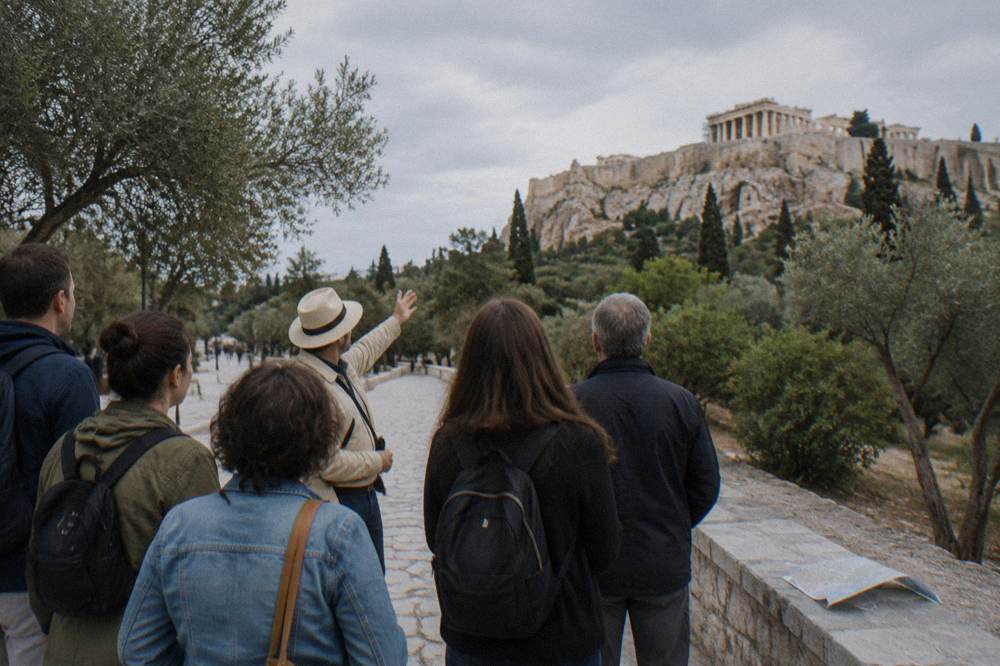
Each walk's own page on GuruWalk or freetour.com states its meeting point, duration and languages; the route itself is the guide's own. Each walk's page states its duration, language and rating, and those are the practical filters. The Trilingual Best-Of Walk, run by Atenas en Español F.T. on freetour.com, rated 9.2 out of 10 across 99 freetour.com reviews, runs 2 hours 30 minutes in English, French and Spanish from the Athens Metropolitan Cathedral. The full list, with every meeting point and language, is in the free walking tours guide.
Three more, all pay what you want, all cardable:
Common Questions On This Topic
Is The Acropolis Free?
No. The Acropolis is ticketed every day, at EUR 30 full and EUR 15 reduced. Entry is free only on the five fixed Ministry dates, 6 March, 18 April, 18 May, the last weekend of September and 28 October, and for the permanent free categories: EU visitors up to 25 with ID, non-EU visitors up to 18 with passport.
Can I Visit Acropolis For Free?
Yes, on the five fixed free dates, or any day if you qualify for a permanent free category: EU visitors up to 25 with an ID card or passport, or non-EU visitors up to 18 with a passport. On every other day and for everyone else, the ticket is EUR 30 full, EUR 15 reduced.
Can You See Acropolis Without Paying?
The free ground around the site costs nothing: the Dionysiou Areopagitou promenade along the south slope is free to walk, and Philopappos Hill and the Pnyx are listed at EUR 0 and open 24 hours. Entering the Acropolis itself is ticketed. The two facts are separate and stay separate.
Do You Have To Pay To Go Up To The Acropolis?
Yes. Going up is entering the state site, and the ticket is EUR 30 full, EUR 15 reduced, used once, covering the Acropolis and its Slopes. Leaving through either exit cancels re-entry. The five fixed free dates and the permanent free categories are the only exceptions.
Is There An Entry Fee For The Parthenon?
The Parthenon stands inside the Acropolis site, so there is no separate Parthenon ticket. The Acropolis entry fee applies: EUR 30 full, EUR 15 reduced, one ticket for the Acropolis and its Slopes, used once. The same five free dates and free categories apply to it.